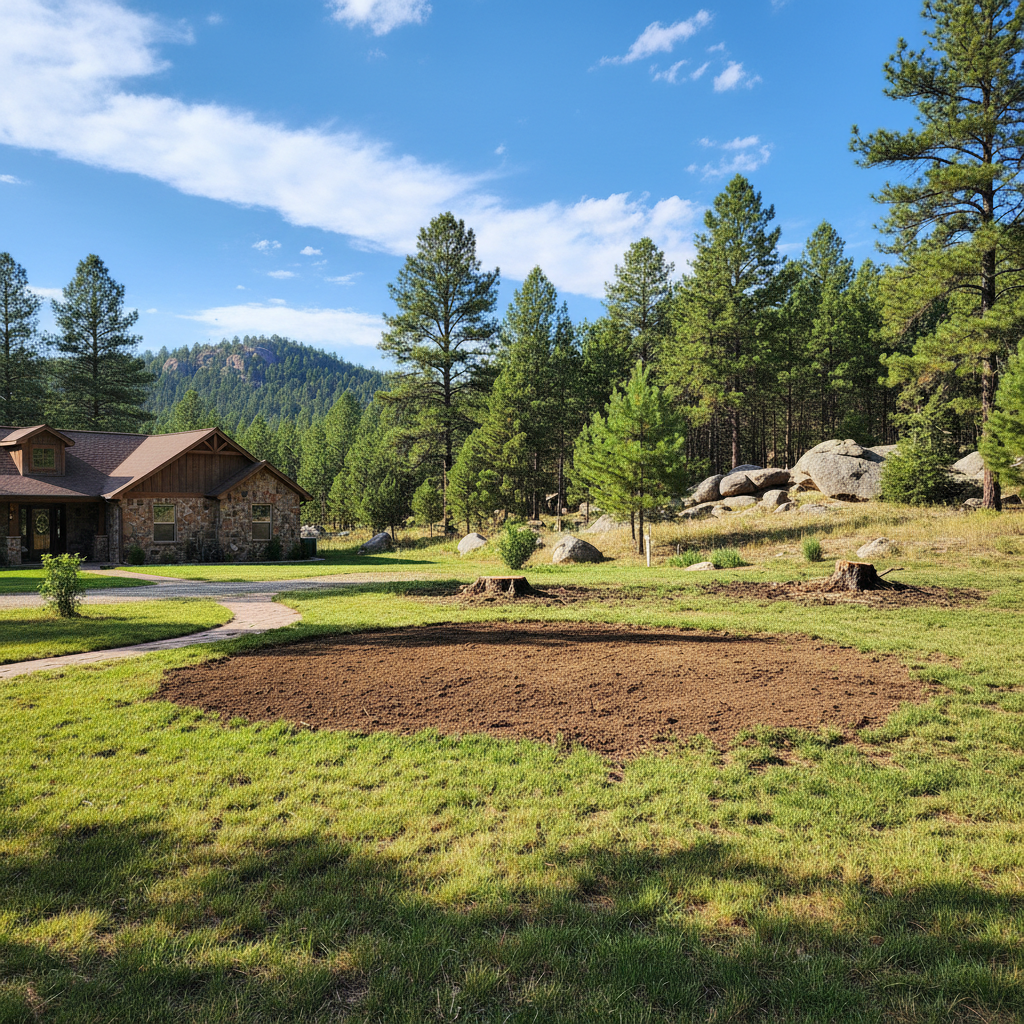
You have had a tree removed from your Custer property. This is great. You have dealt with the immediate issue. It might have been a hazard, a disease, or just making way for a new project. But the job is not truly finished when the last log is hauled away. What you do next, as well as in the months and years following, makes a big difference in how that spot on your land holds up.
Extending the Life of the Work: Beyond the Removal
When Midway Tree finishes a tree removal, we make sure the site is clean as well as ready for whatever is next. But it is up to you to keep it that way. The biggest thing you are fighting here in the Black Hills, especially on those steeper slopes around French Creek, is soil erosion. We have that rocky, sometimes loose soil. In addition, when you remove a big tree, you are taking away a root system that was holding a lot of that dirt in place.
- Fill the Void Promptly: If we have ground a stump, you will have a hole. Do not leave it open to the elements. Fill it immediately with a mix of topsoil as well as some of the wood chips from the grinding. Pack it down firm. This helps stabilize the soil as well as prevents water from washing it away or creating sinkholes. You might need to add more fill as it settles over time.
- Replant or Re-seed Strategically: If you are not building, consider planting new, smaller vegetation or seeding grass. This helps establish new root systems quickly to bind the soil. Choose native plants that are well-suited to our climate as well as our soil conditions in Custer.
- Manage Water Runoff: Pay attention to how water flows across the area. This is especially important during our spring thaws as well as summer thunderstorms. If you have a slope, you might need to consider some simple erosion control measures. These can include straw wattles or even terracing if it is a significant grade.
Regular Maintenance: Keeping an Eye on Things
Once the initial site work is done, regular check-ups are important. You are looking for anything that seems out of place or indicates a problem brewing.
- Watch for Regrowth: Some tree species are stubborn. This is especially true for fast-growing ones like aspens or certain pines. Even after a thorough stump grinding, dormant buds in the remaining root system can sprout new shoots. These are sometimes called suckers. If you see these, cut them back immediately. For persistent sprouts, you might need to apply a targeted herbicide directly to the fresh cut to kill the root system.
- Monitor Soil Settlement: The ground where a large tree once stood will settle. Keep an eye on it, especially after heavy rains or snowmelt. Fill in any depressions to maintain an even grade as well as prevent water from pooling.
- Check for Pests or Disease in Nearby Trees: Removing one tree might have been because of disease or pests. Keep a close watch on surrounding trees for similar symptoms. Here in South Dakota, we deal with things like Emerald Ash Borer (EAB) if you had ash trees. We also deal with Mountain Pine Beetle in our Ponderosa pines. Early detection can save other trees in Custer.
Warning Signs of Problems
Knowing what to look for can save you a lot of grief as well as expense down the road. These are not always obvious, but they are red flags.
- Sudden or Excessive Regrowth: A few small suckers are one thing. However, if you have a whole forest trying to come back from a stump, that is a sign the root system is still very active. It needs more aggressive treatment.
- Unusual Soil Movement or Cracks: Beyond normal settling, you might see significant cracks forming in the ground around the old tree site. Also, nearby structures like sidewalks or foundations might start to shift. This is a serious concern. It could mean large roots are decaying and creating voids. It could also mean that soil stability is compromised.
- Fungal Growth: Mushrooms or other fungal bodies might appear on or around the old stump. They can also appear in the soil nearby. This can indicate decay in the remaining root system. While some fungi are harmless, others can be a sign of root rot. Root rot can spread as well as affect other plants.
- Water Pooling: If you notice water consistently collecting in the area where the tree was removed, it means the drainage is not right. This can lead to further soil erosion as well as create issues for any new plantings.
When to Call a Professional
You can handle a lot of the basic stuff yourself. But some situations definitely warrant bringing in the pros. Do not hesitate to call Midway Tree or another certified arborist if you see any of these things.
- Persistent Regrowth: If you have tried cutting back sprouts and they just keep coming, or if you are dealing with a particularly aggressive species, a professional can apply stronger, targeted treatments. They can also re-grind deeper.
- Significant Soil Erosion or Instability: You might be seeing large ruts from water. You might also see significant shifting of the ground. In addition, nearby structures might be affected. You need an expert to assess the situation as well as recommend proper erosion control or structural solutions.
- Signs of Disease or Pests Spreading: You might suspect the original tree was removed because of disease or pests. If you are now seeing symptoms in other trees on your property, get an arborist out there right away. Early diagnosis as well as treatment are important. For instance, if you are seeing yellowing leaves, thinning canopies, or strange growths on other trees, that is a red flag.
- Large or Deep Root Systems: You might be planning new construction or extensive landscaping in the area where a very large tree was removed. You might need a professional to make sure all significant root material is gone. This helps prevent future issues with foundations or plumbing.
- Any Doubt or Concern: If you are just not sure about something, give us a call. It is always better to get an expert opinion early. This is better than letting a small problem turn into a big, expensive one. We are here in Custer. We know the specific challenges our local environment presents. This includes the strong winds that can stress trees as well as the unique soil compositions.
Taking care of your property after a tree removal is not glamorous. But it is essential. A little proactive maintenance goes a long way in keeping your land healthy as well as safe for years to come.