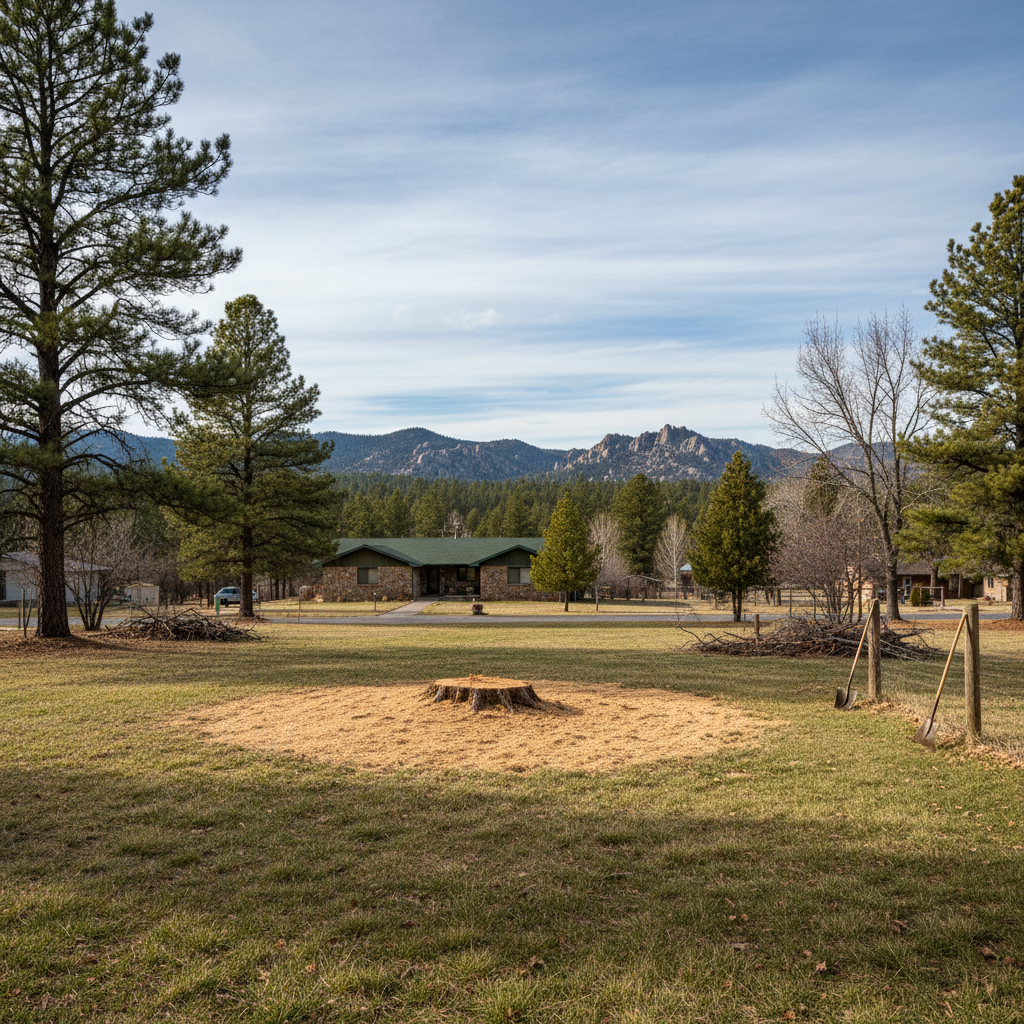
That old tree stump in your yard isn't just an eyesore; it's a tripping hazard, a home for pests, and it can even mess with your landscaping plans. Getting rid of it is a smart move, but timing is everything, especially here in Custer. You've got to consider our unique climate if you want the best results and to protect your investment.
When's the Best Time to Schedule Stump Grinding?
Honestly, you can grind a stump pretty much any time of year, but some seasons are definitely better than others for a few key reasons. Here's what I've seen working with folks all over Custer, from the homes up by the Needles Highway to the ranches out towards Hermosa.
- Fall and Early Spring: The Sweet Spot. This is often the ideal time. In fall, after the leaves drop, the ground is usually still workable, and the cooler temps mean less stress on the equipment and the crew. Plus, you're getting ahead of spring planting. Early spring, before things really green up, is also great. The ground is thawing, but it's not usually too muddy yet. It's prime time to clear space for new landscaping or a garden.
- Summer: Doable, But With Caveats. We certainly do stump grinding in the summer. The ground is dry, which is good for access, but those long, hot spells can make the work tougher. If you're planning to reseed or plant right after, you'll need to be diligent with watering. Also, summer often means more active schedules for homeowners, so sometimes it's harder to coordinate.
- Winter: Tricky, But Not Impossible. This is where our Custer winters really come into play. If the ground is frozen solid, stump grinding becomes a much bigger challenge. It's harder on the equipment, and it takes longer. If we get a mild winter with less deep frost, it's more feasible. But generally, I'd say if you can wait until spring, it's usually better. We don't want to tear up your yard trying to break through rock-hard earth.
How Weather Conditions Affect the Work
Weather isn't just about comfort; it directly impacts how we do the job and what kind of finish you get.
- Frozen Ground: As I mentioned, this is the biggest hurdle. Our Black Hills soil, especially the clay-heavy stuff some of you have, can freeze like concrete. Grinding through that is slow, tough, and can damage equipment. It also makes it harder to get a smooth, even grind.
- Heavy Rain/Mud: While a little rain isn't a problem, a really saturated, muddy yard can be. It makes it difficult to maneuver heavy equipment without causing significant ruts or damage to your lawn. We always try to minimize impact, but sometimes, if it's too wet, we'll need to reschedule for everyone's sake.
- Extreme Heat: For the crew, working in 90+ degree heat is grueling. It also means we might need to take more breaks, which can extend the job time.
- Snow Cover: A light dusting isn't an issue, but deep snow can hide the stump, making it harder to accurately grind down. We need to be able to see what we're doing to ensure a thorough job.
Protecting Your Investment Year-Round
Once that stump is gone, you've made an investment in your property. Here's how to keep it looking good and prevent future headaches:
- Fill and Grade Properly: After we've ground the stump, you'll have a hole filled with wood chips. You can leave some chips for mulch, but for a smooth lawn, you'll want to remove most of them and fill the hole with good topsoil. Grade it slightly above the surrounding ground, as the soil will settle over time.
- Seed or Plant Promptly: Don't leave bare earth for too long. Seed with grass or plant new shrubs or flowers to prevent weeds from taking over. This also helps stabilize the soil and prevent erosion, especially on slopes.
- Monitor for Regrowth: Occasionally, especially with certain tree species, you might see small shoots trying to sprout from any remaining root fragments. Just snip them back as soon as you see them, and eventually, the roots will die off.
- Consider Drainage: If the stump was in a low-lying area, make sure your new landscaping doesn't create a water trap. Good drainage is key to a healthy yard here in Custer, where we can get heavy snowmelt or summer downpours.
Getting rid of a stump is more than just running a machine; it's about understanding the local conditions and planning ahead. If you've got questions about a specific stump or when to schedule, don't hesitate to give us a call at Midway Tree. We're here to help you make the best decisions for your Custer property.